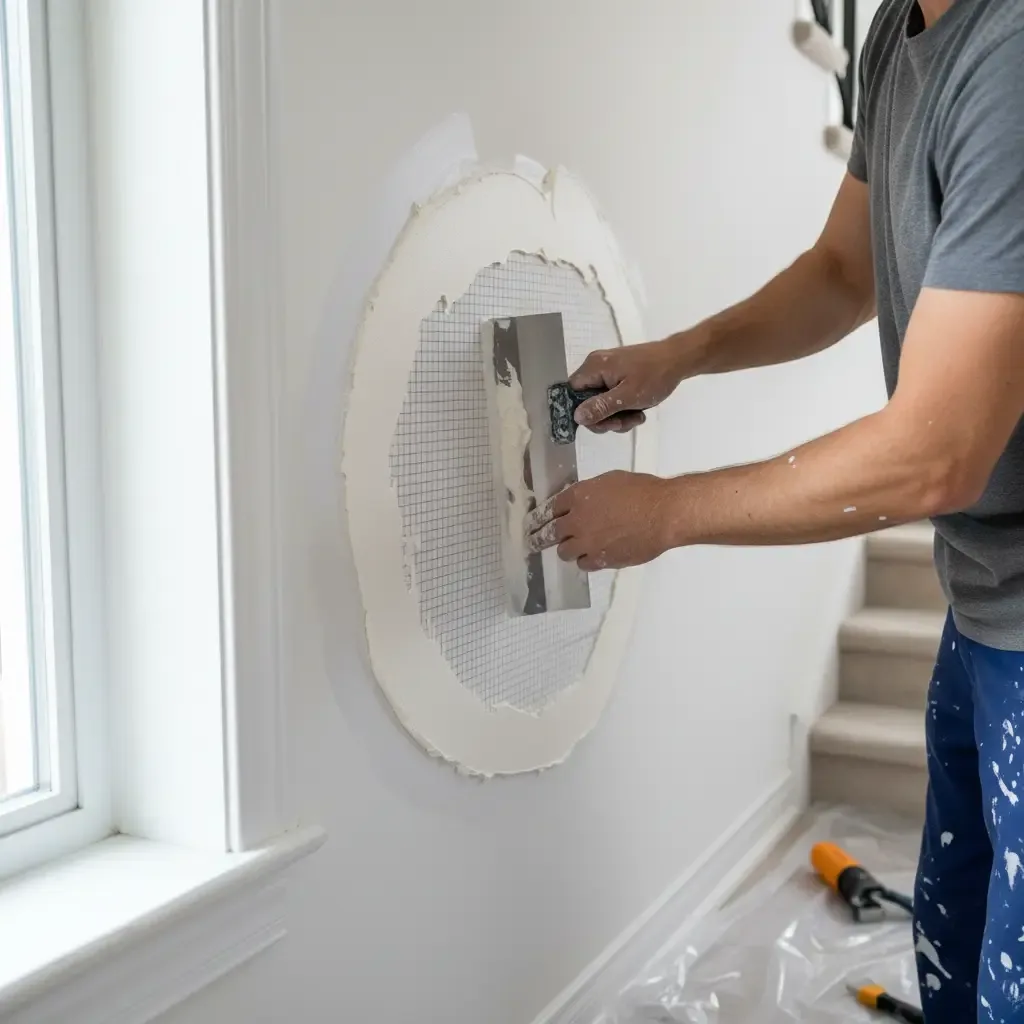
Drywall Repair That Stays Repaired
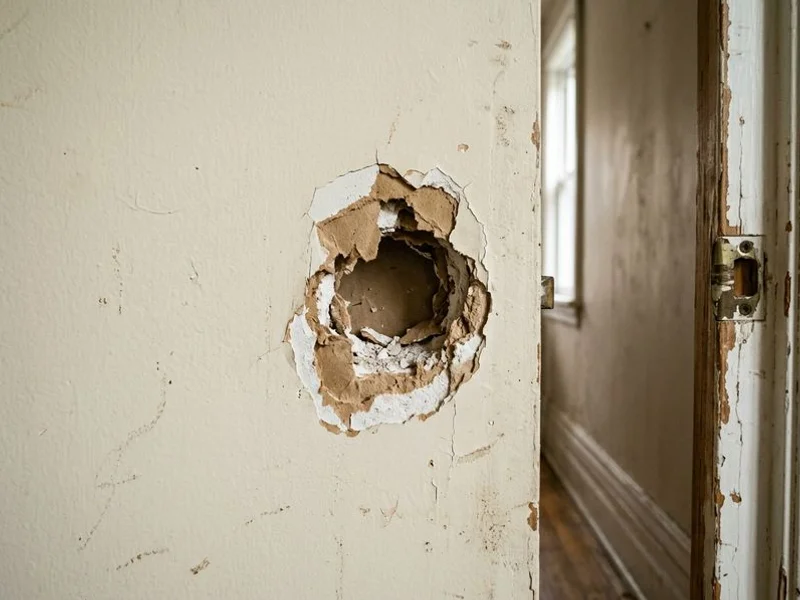
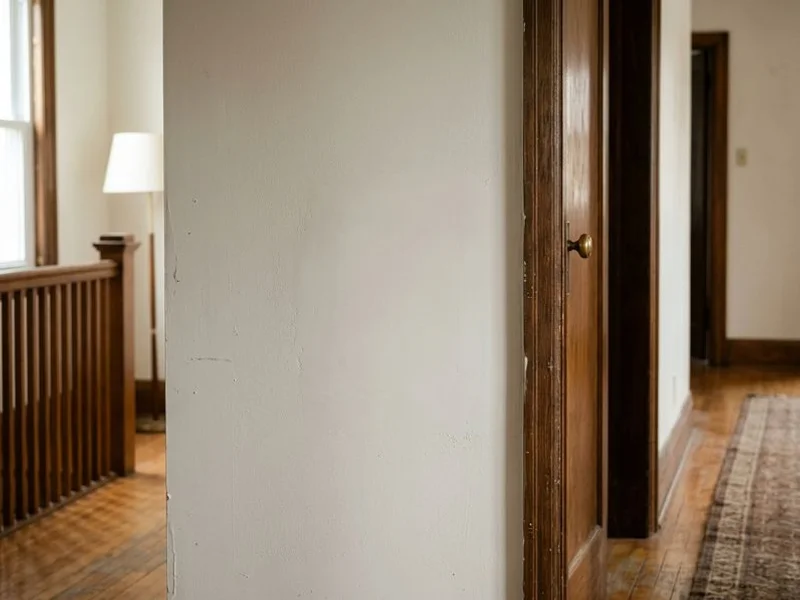
A drywall patch isn’t just about closing the hole. It’s about closing it so well that the next person who walks into the room can’t tell where it was. That’s the standard we hold every repair to, whether it’s a doorknob hole in the hallway or a network of settling cracks across an 1920s Cabbagetown ceiling.
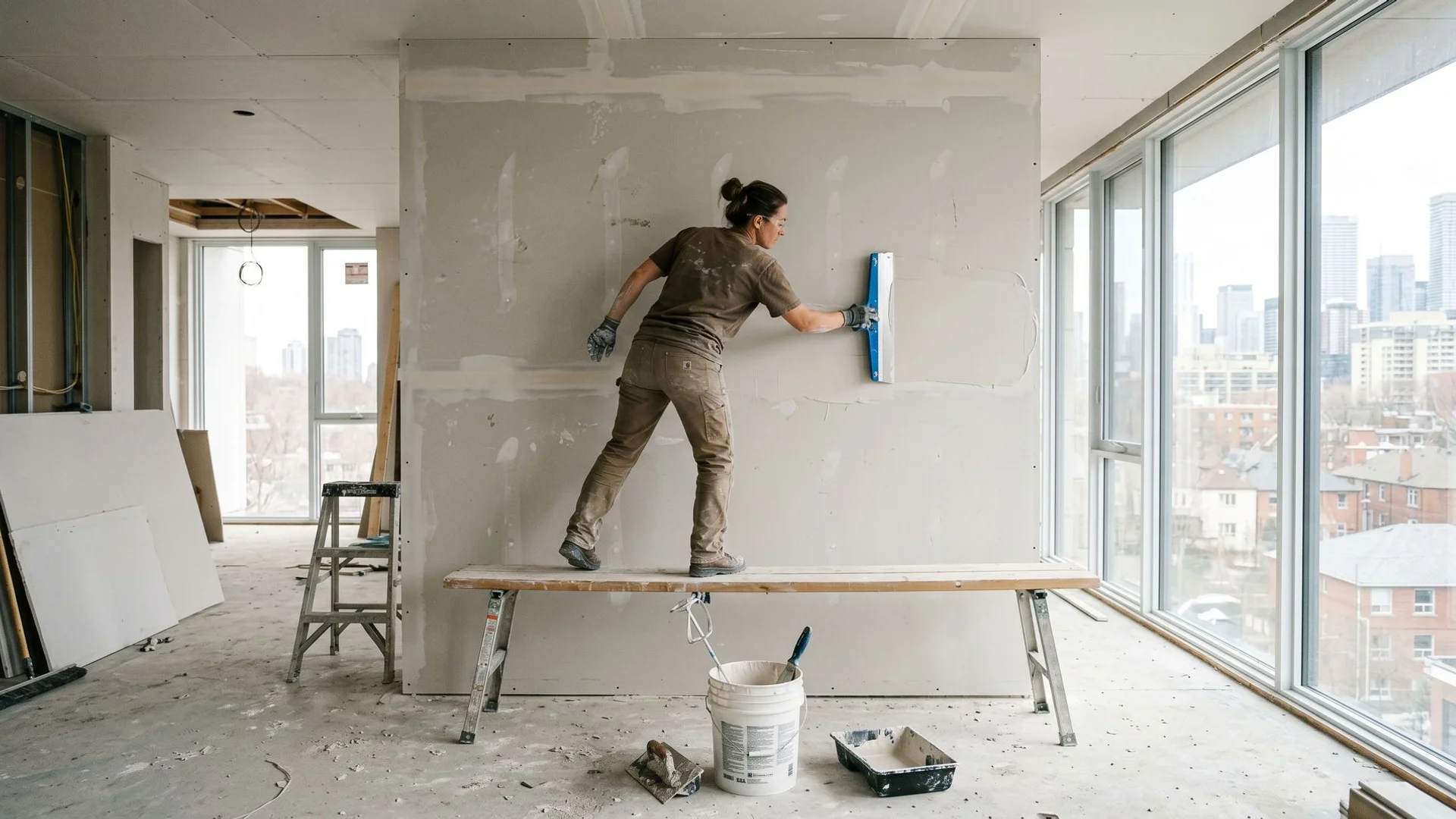
The difference between a 30-minute patch and an invisible one is mostly in the feathering. A quick fix puts mud over the hole and sands it flat. An invisible one extends the mud transition 8 to 12 inches past the actual patch on each side, sanded under raking light so there’s no telegraphing when paint goes on.
Common Drywall Repair Costs in Toronto (2026)
- Small hole repair (doorknob, picture hook): $150 to $250 per visit
- Medium hole or large patch (4 to 24 inches): $250 to $450 per visit
- Hairline crack repair with mesh tape and skim coat: $200 to $400 per affected area
- Settling crack repair in pre-1960s homes: $300 to $600 per affected area
- Ceiling repair with texture matching: $350 to $700 per affected area
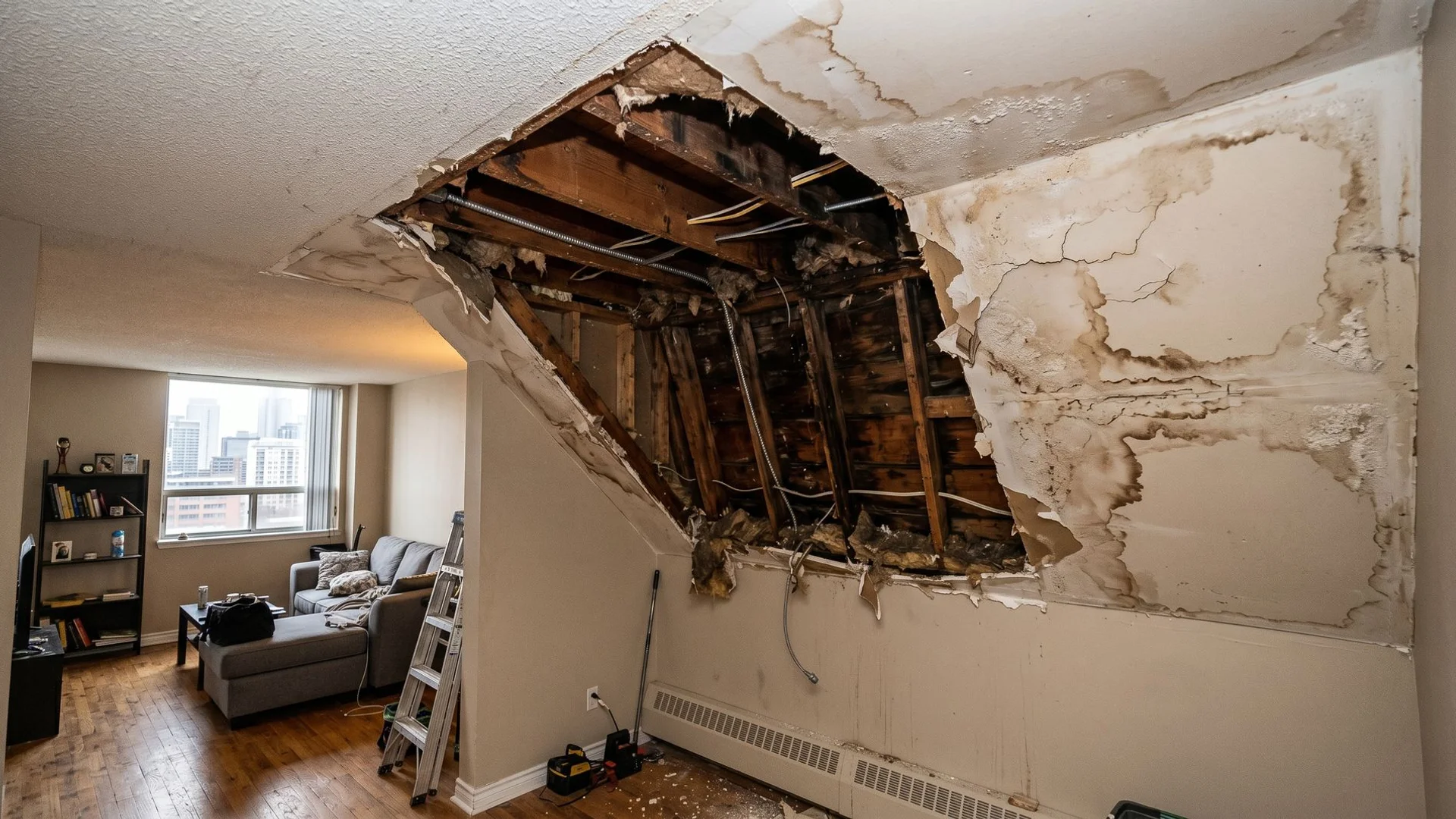
- Water-damaged section removal and replacement: $400 to $1,200 per affected area
- Per-square-foot drywall repair rate: $1.50 to $4.50
- Hourly rate for small jobs: $50 to $150 per hour
Most single-room repairs land between $150 and $400. Multi-room or water-damage repairs are quoted on-site with line-item pricing.
What We Actually Repair
Small holes (under 4”). Doorknob impacts, picture-hook tears, drilled openings that need to close. We use a backer-and-patch system that’s structurally sound and feathers invisibly.
Larger holes (4 to 24 inches). Plumbing access cuts, electrical openings, accidental impact damage. We cut a clean rectangle, scribe in a new piece of drywall, tape three sides, and feather wide.
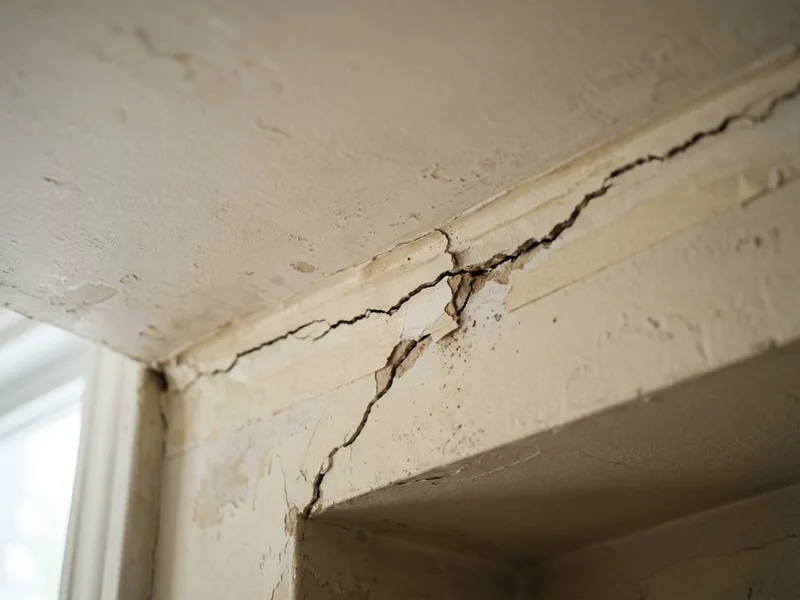
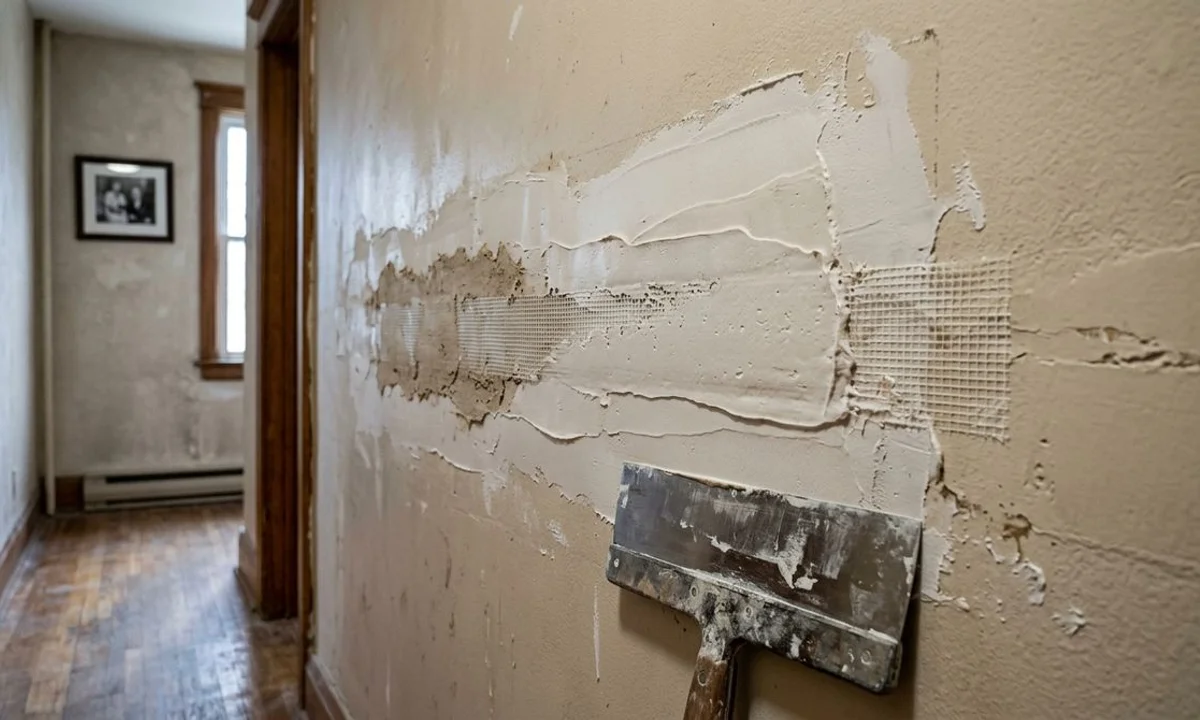
Hairline cracks. Common in older Toronto homes from settling and seasonal humidity. We widen the crack with a utility knife, re-tape with mesh, and skim-coat the area before priming.
Settling cracks in pre-1960s homes. These are the persistent ones. Painting over them works for one season. The lasting fix uses mesh tape, a flexible sealer primer, and sometimes a backer board if the crack is at a structural transition point.
Nail pops. Drywall fasteners that have backed out behind the panel paper. We re-set the fastener, add a backup screw 1.5 inches away, and skim over both.
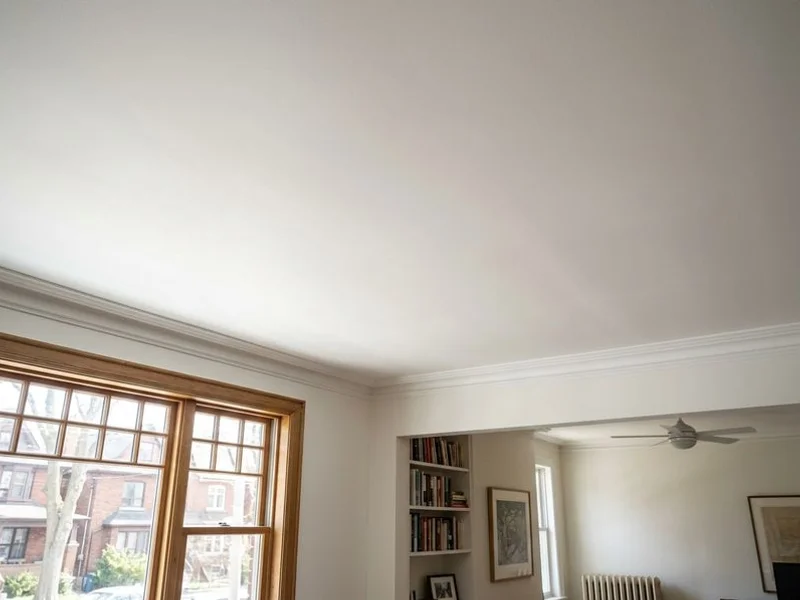
Ceiling repairs. Around HVAC and lighting changes, water-damage replacements, and texture-matched patches. Ceilings are harder than walls because gravity and overhead lighting both work against you.
Texture matching. Knockdown, stipple, orange peel, and older swirl textures all need to be matched after the repair so the patch reads as part of the original ceiling.
Settling Cracks in Older Toronto Homes
Pre-1960s Toronto homes (the Annex Victorians, the Cabbagetown row houses, the Riverdale and Leslieville bungalows) often have plaster-on-lath ceilings or balloon framing. Both move with the seasons. A crack that opened up in January and closed in July is a settling crack, and painting over it won’t hold.
The lasting fix is to widen the crack with a knife, embed mesh tape, skim-coat over the tape, prime with a flexible elastomeric sealer, and then paint. We’ve done this on hundreds of older Toronto homes and the cracks stay closed.
When a Patch Isn’t Enough
There are jobs where we’ll tell you honestly that a patch won’t last. Water-damaged drywall that’s spent more than a few days saturated needs to come out, because patching over it traps moisture and grows mold. Structural cracks that follow a load path (across a header, around a doorway, down a corner) need the underlying issue addressed first. Crumbling plaster over lath that’s pulling away from the ceiling joists is often better converted to modern drywall than skim-coated yet again.
We’ll tell you which category your repair falls into before any work starts.
Where We Do Drywall Repair
Drywall repair across the Greater Toronto Area. Primary coverage includes Toronto, Mississauga, Brampton, Etobicoke, North York, and Scarborough, with same-week scheduling for most residential repairs.
What Is Drywall Repair?
Drywall repair is the process of restoring damaged gypsum panel sections so that the repaired area is invisible under paint. Repairs range from small nail holes and hairline cracks that take one coat and an hour to complete, to full panel replacements on water-damaged walls that require framing inspection, patch installation, tape, three coats of compound, and texture matching. The challenge in drywall repair is not patching the hole but matching the finish level and texture of the surrounding wall so the repaired area disappears. Toronto homes have a wide range of existing wall textures, and matching them correctly requires experience with orange peel, knockdown, smooth Level 4, and custom spray patterns.
What Does Drywall Repair Include?
- Damage assessment and cause identification before any patching begins
- Small patch: compound fill, mesh or California patch, feathered flush with two to three coats
- Large patch: backing installation (California patch or wood backer), new drywall section, tape, three-coat finish
- Full section replacement: cut back to nearest stud, hang new panel, tape all seams, three-coat finish
- Texture matching: orange peel, knockdown, skip trowel, or smooth Level 4 to match existing wall
- Raked-light walk-through and touch-ups before handover
How Much Does Drywall Repair Cost in Toronto?
Drywall repair in Toronto runs $150 to $350 for small patches (nail holes, single impact damage, hairline cracks). Medium repairs covering 1 to 4 square feet run $200 to $600. Large section replacements and water damage repairs run $400 to $1,500 depending on scope, framing condition, and texture match required. Whole-room repair and refinish runs higher. Free on-site assessment with same-day quoting in most cases.
Who Needs Drywall Repair?
Homeowners with doorknob holes, nail pops, or settling cracks in older Toronto homes. Landlords and property managers doing tenant turnover repairs between tenancies. Sellers prepping a home for listing who need invisible patches. Renovation contractors who need a qualified drywall sub to close out a scope cleanly.