Drywall Built for Toronto Basements
Toronto basements are humid, prone to seasonal moisture swings, and code-regulated for fire and acoustic separation from the living space above. Standard 1/2-inch drywall doesn’t belong below grade in this climate. Within a few years, paper-faced panels in a humid basement will absorb moisture and start to grow mold on the back side.
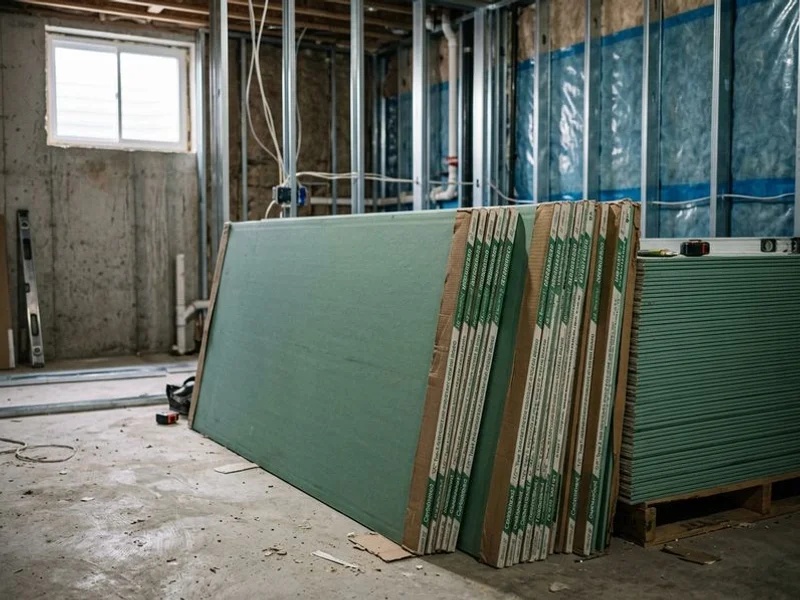
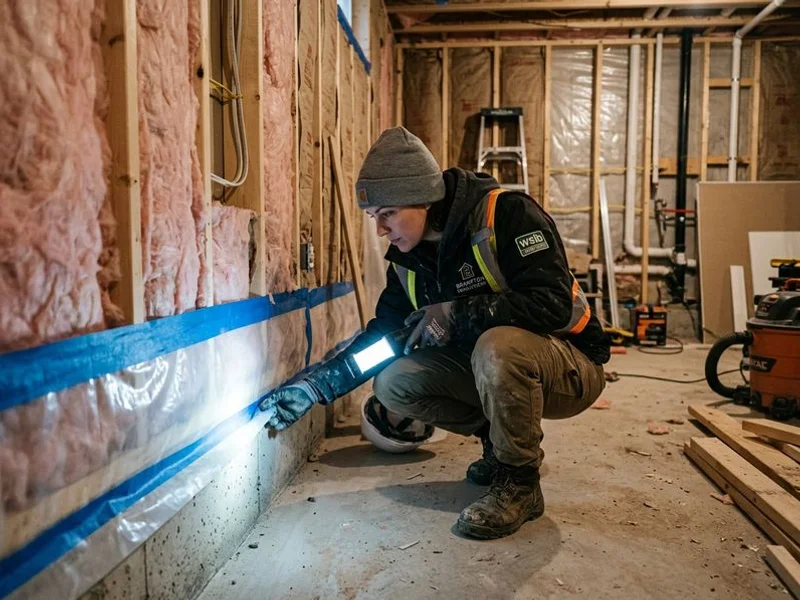
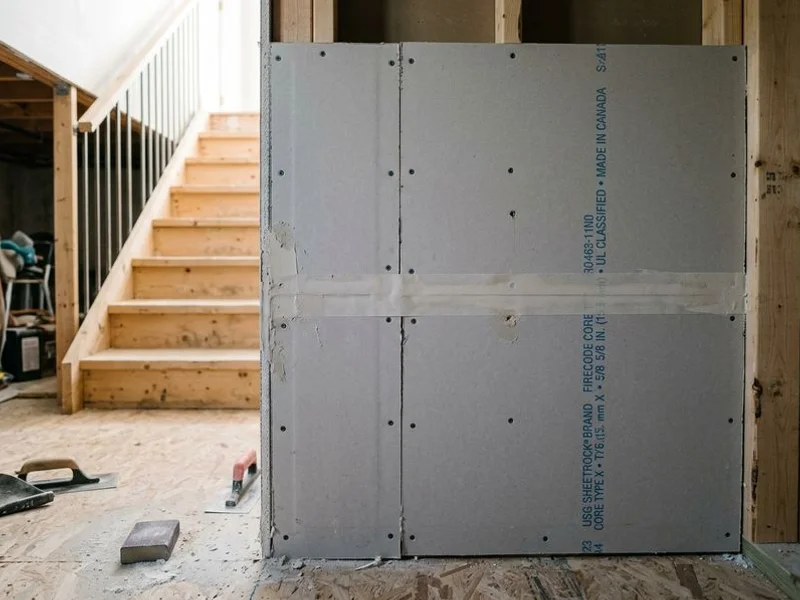
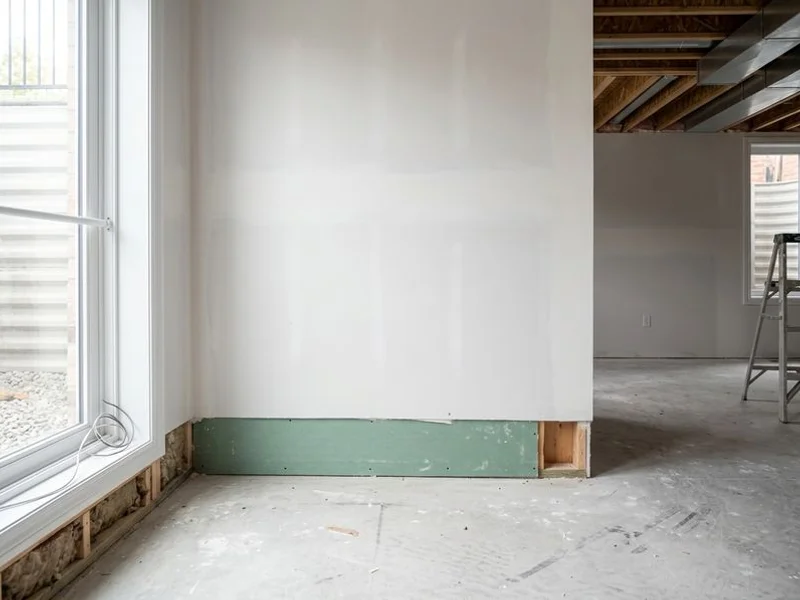
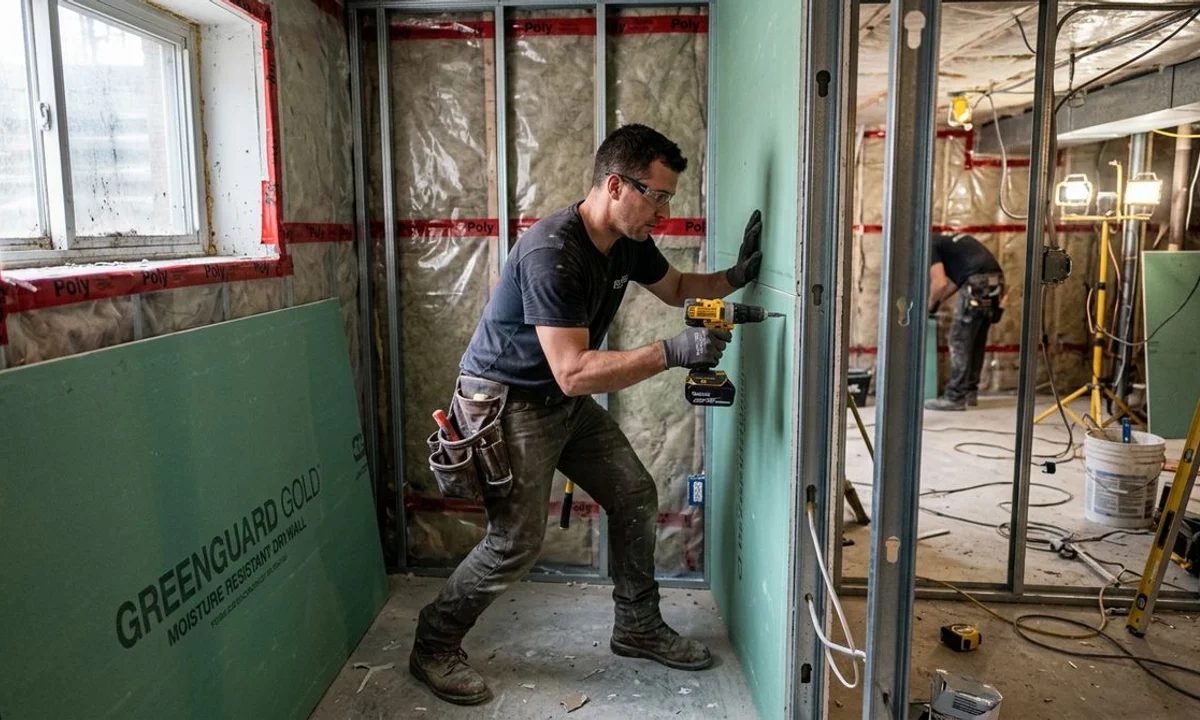
We install moisture-resistant Green Board (and paperless Purple Board for higher mold resistance) below grade and around any mechanicals. We coordinate insulation and vapor-barrier prep with your insulation contractor, install 5/8-inch Type X at the basement-stair separation as Ontario Building Code requires, and finish to Level 4 ready for primer.
Common Basement Drywall Costs in Toronto (2026)
- Basement drywall installation (per square foot, installed and finished): $3 to $6
- Moisture-resistant Green Board premium over standard: 20 to 30 percent
- Paperless Purple Board premium for high-mold-risk areas: 35 to 50 percent
- Type X fire separation at basement stair (typical): $800 to $1,800
- Bulkhead framing and finishing (per linear foot): $35 to $70
- Full 800 to 1,200 sq ft basement (framing through Level 4 finish): $4,500 to $9,500
- Legal-suite basement drywall (Peel Region permit-ready): Quoted per project from drawings
- Vapor barrier and insulation coordination: Coordinated with insulation contractor
Most Toronto basement drywall jobs run 7 to 14 working days for framing through paint-ready handover.
The Panel Selection That Actually Matters
Green Board. Moisture-resistant paper-faced drywall with green coating and treated paper. Standard for any wall below grade or anywhere humidity will be elevated (bathroom walls, behind sinks, around basement mechanical rooms). Roughly 20 to 30 percent more expensive than standard drywall.
Purple Board. Paperless drywall with a fiberglass mat in place of paper. Much higher mold resistance because mold needs paper to colonize. We recommend Purple Board for basements with known historical moisture issues, or any below-grade work where the homeowner specifically wants maximum mold protection.
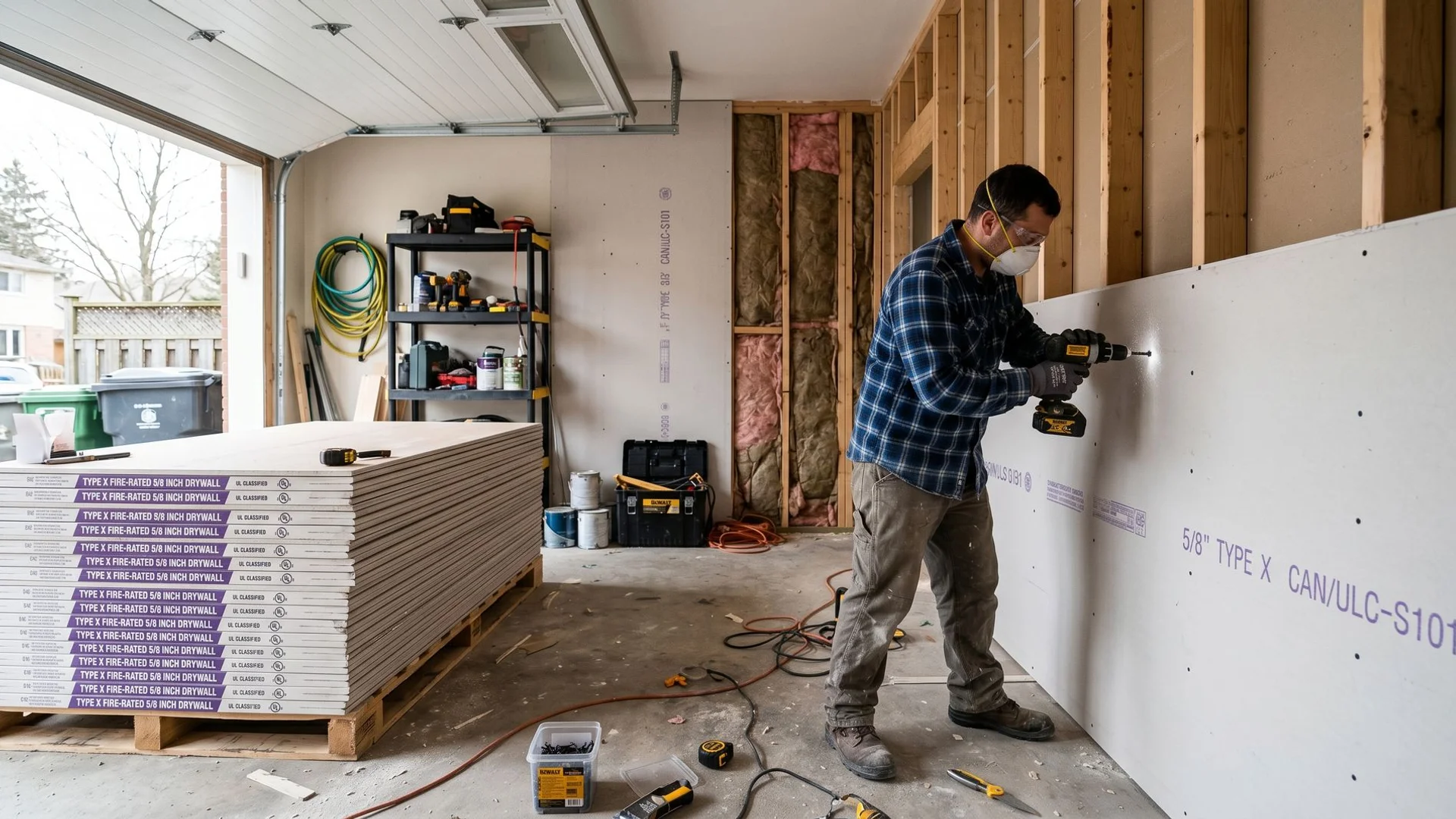
5/8-inch Type X. Fire-rated drywall, required by Ontario Building Code at the basement-stair separation when the basement is finished and living above is occupied. This is the catch many basement-finishing homeowners don’t know about until inspection.
Standard 1/2-inch. Only used above grade and away from any moisture source. Not for basement perimeter walls.
What a Code-Compliant Toronto Basement Looks Like
A finished basement in Toronto (or anywhere in Ontario, really) needs to meet several specific requirements:
- Vapor barrier continuous on the warm side of insulation (between insulation and drywall in our climate).
- Insulation to R-value compliance per Section 9.36 of Ontario Building Code (typically R-20 in basement walls, R-31 in floor over basement when applicable).
- Type X fire separation at the basement stair where it meets the living floor above.
- Moisture-resistant panels below grade.
- Egress windows to code for any sleeping room.
We coordinate with your insulation contractor on items 1 and 2, install items 3 and 4 ourselves, and reference items 1, 2, and 5 in the framing inspection.
Bulkheads, Soffits, and HVAC Ceiling Work
Most Toronto basements have HVAC ducts, beams, and plumbing running below the floor joists. Hiding them takes bulkhead and soffit framing, and that framing has to be drywalled to match the rest of the ceiling.
We frame and finish bulkheads as part of our basement scope. Common bulkhead locations include:
- Along the perimeter under HVAC supply runs
- Around the main beam (often spanning the long axis of the basement)
- Below plumbing drains and waste lines
- Around the panel and water-heater area
A clean basement ceiling depends entirely on whether the bulkhead corners are square, mitered properly, and finished to the same Level 4 standard as the flat ceiling. We don’t cut corners on bulkhead work because every visitor’s eye lands on those joints.
Legal-Suite Basement Work (Brampton, Mississauga, Toronto)
Legal-suite basement conversion is one of the most common basement-finishing scopes we see, especially in Brampton, Mississauga, and Scarborough. A legal secondary suite needs:
- All Type X requirements at the stair separation and around mechanical
- Soundproofing between suites (often a separate acoustic-rated assembly)
- Code-compliant egress for any bedroom
- Proper smoke and CO alarms (your electrician handles this)
We coordinate with Peel Region permit conventions and inspection timing.
Where We Drywall Basements
Across the Greater Toronto Area, with highest volume in Mississauga, Brampton, and Oakville suburban detached homes. We work secondary cities including Vaughan and Markham with 1-2 day scheduling lead.
What Is Basement Finishing Drywall?
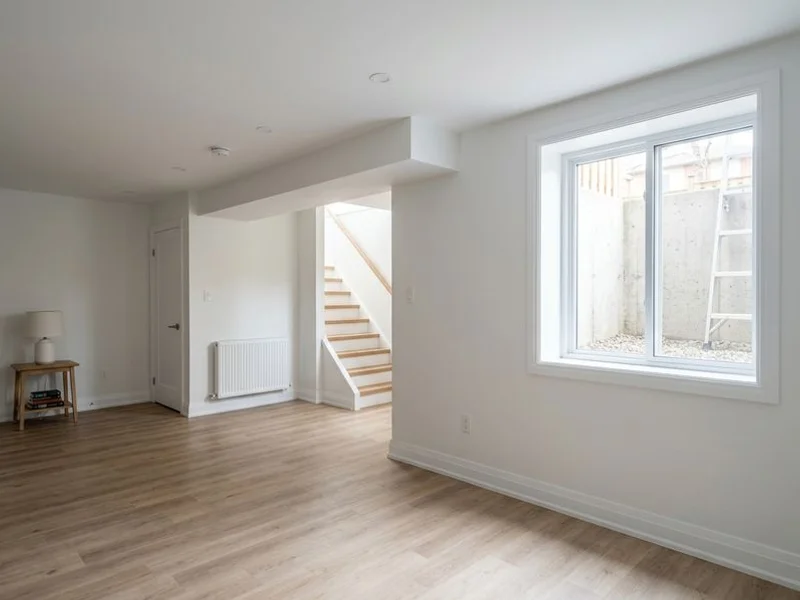
Basement finishing drywall is the process of framing, insulating, and cladding below-grade walls and ceilings with gypsum panels to convert an unfinished concrete basement into livable space. It differs from above-grade drywall in that moisture management is critical: below-grade walls require a poly vapour barrier, moisture-resistant Green Board or Purple Board panels, and proper drainage plane details to prevent mold behind finished walls. Ontario Building Code Part 9 sets minimum insulation requirements and egress window sizing for basement bedrooms. Done correctly, a finished Toronto basement adds significant livable square footage and assessed value to the home.
What Does Basement Finishing Drywall Include?
- Steel-stud or pressure-treated wood framing set away from the foundation wall with a drainage gap
- 6-mil poly vapour barrier behind all below-grade wall framing
- Batt insulation in wall cavities to meet OBC minimum R-values
- Moisture-resistant Green Board or Purple Board on all below-grade walls
- Standard 1/2-inch drywall on interior partition walls and ceilings
- Three-coat tape and finish with Level 4 handover
How Much Does Basement Finishing Drywall Cost in Toronto?
Basement drywall in Toronto runs $3 to $6 per square foot installed and finished, depending on ceiling height, partition layout, and panel type. A typical Toronto basement (600 to 900 sq ft) runs $4,500 to $9,500 for full drywall installation including framing and moisture-resistant panels. Finishing only (no framing) runs lower. Free on-site estimate with line-item breakdown.
Who Needs Drywall Basement Finishing?
Homeowners converting an unfinished basement into a rental suite, home office, gym, or playroom. Investors adding legal secondary units to increase rental yield. Builders finishing basement suites in new construction townhomes and detached homes across the GTA. Anyone tired of looking at exposed joists and wiring in a basement that could be productive living space.